Legacy time-of-use periods are ending in California. This post will cover three items for public agencies with solar:
- What changed
- Why it matters for solar project economics, and
- What public agencies should do now.
What changed
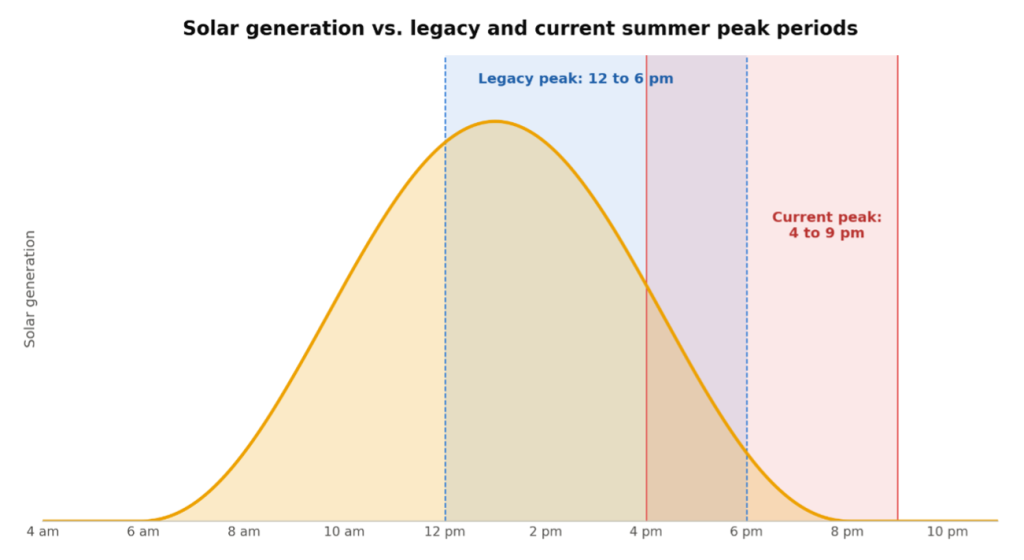
In 2017, the California Public Utilities Commission adopted a framework to shift customers from “legacy” time-of-use (TOU) periods to new periods. The goal was to better align retail electricity rates with the hours when electricity is most costly to provide, including conditions in the wholesale market. Two changes stand out: the summer peak moved from noon–6 p.m. to 4–9 p.m., and the summer season shortened from May–October to June–September. Specific periods and seasons vary by utility and rate schedule.
The change affects customers differently depending on when they use electricity. But it is especially consequential for California public agencies that installed solar under the old TOU periods. That means the forecasted bill savings where based on legacy TOU rates when the peak prices coincided with solar production.
Under the newer evening peak periods, the same solar system would earn lower credits for energy exported while the customer pays higher rates for electricity used after solar production declines.
The CPUC provided a transition period for eligible existing and in-development solar projects. For qualifying public agency projects with interconnection applications submitted by December 31, 2017, legacy TOU periods could continue for up to 10 years from permission to operate, subject to a July 31, 2027 outer deadline for most public agencies and December 31, 2027 for qualifying schools. Individual expiration dates can arrive earlier.
Note: the shift in the TOU periods does not itself end the underlying net metering arrangement.
This is no longer a future issue. Investor-owned utility (IOU) customers are now receiving letters notifying them that legacy TOU protection is ending. For example, a Southern California Edison notice recently provided to TerraVerde from a public agency client states that affected TOU-8-R accounts will automatically transition to the utility’s standard business TOU periods in October 2026.
Why it matters for solar project economics
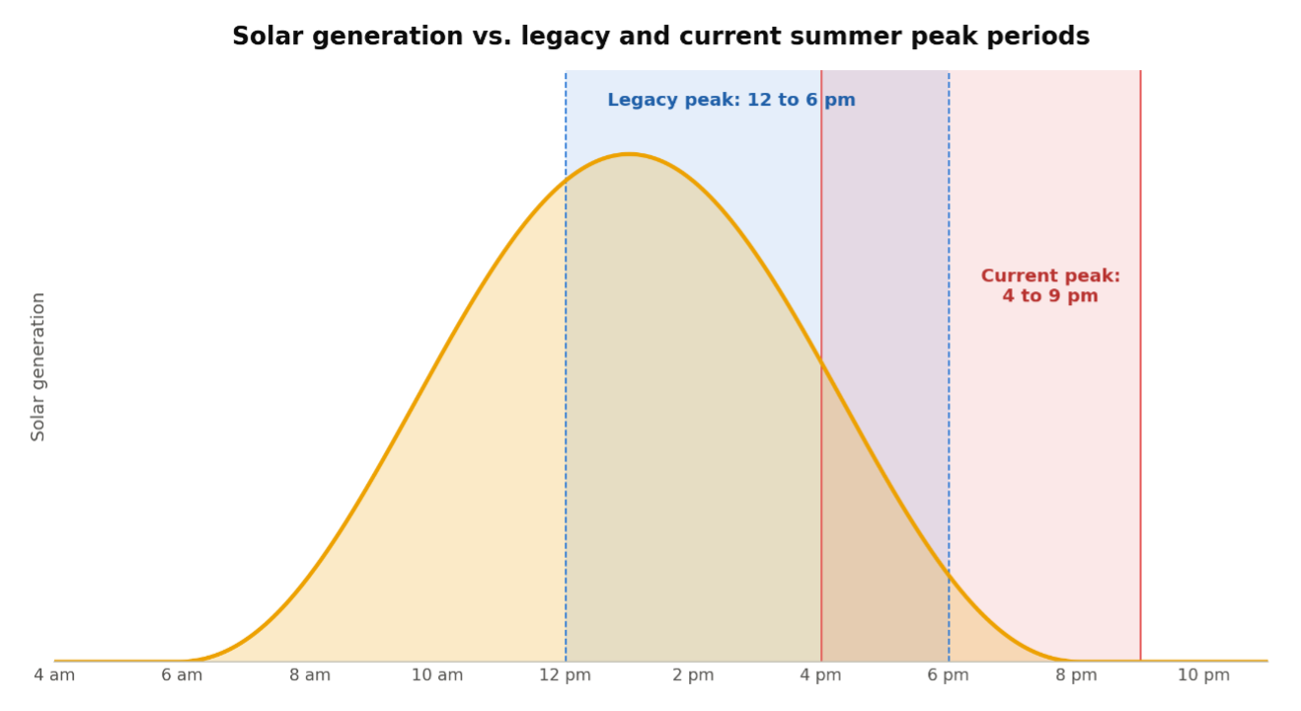
Agencies should not assume that taking no action means their energy costs will stay the same. Most solar generation falls within the legacy daytime peak period; relatively little falls within the newer evening peak.
The impact on a bill depends on a site’s load profile, solar production, export credits, applicable tariff and demand charges. A site with little usage from 4–9 p.m. may benefit from lower peak-period consumption, while a facility with substantial evening load may face higher costs.
What public agencies should do now.
Before the transition, public agencies should confirm the expiration date and replacement tariff for each account, model bills using interval load and solar production data, and evaluate rate options or operational changes. For some facilities, battery storage or targeted load shifting may improve economics, but only site-specific analysis can establish the value.
TerraVerde helps public agencies evaluate their TOU transition, compare eligible rate options and identify practical ways to protect the value of their solar investments.
Sources and further reading
PG&E solar billing and legacy TOU expiration guidance: https://www.pge.com/en/account/billing-and-assistance/understand-your-bill/solar-bill.html
SCE business TOU periods and tariff explanations: https://www.sce.com/business/rates-financing/rate-plans/business-time-of-use-rate-plans
CPUC Resolution addressing public-agency legacy eligibility: https://docs.cpuc.ca.gov/PublishedDocs/Published/G000/M328/K121/328121797.PDF
TerraVerde can help
At TerraVerde Energy, we partner with public agencies to manage their investment in solar and battery installations. Our dedicated, experienced team actively monitors systems daily, responds immediately to performance issues, manages 3rd party (PPA) providers, and provides detailed finance and performance reports. We optimize the performance and management of these systems so that your team can realize maximum savings with minimal time and resource investment.
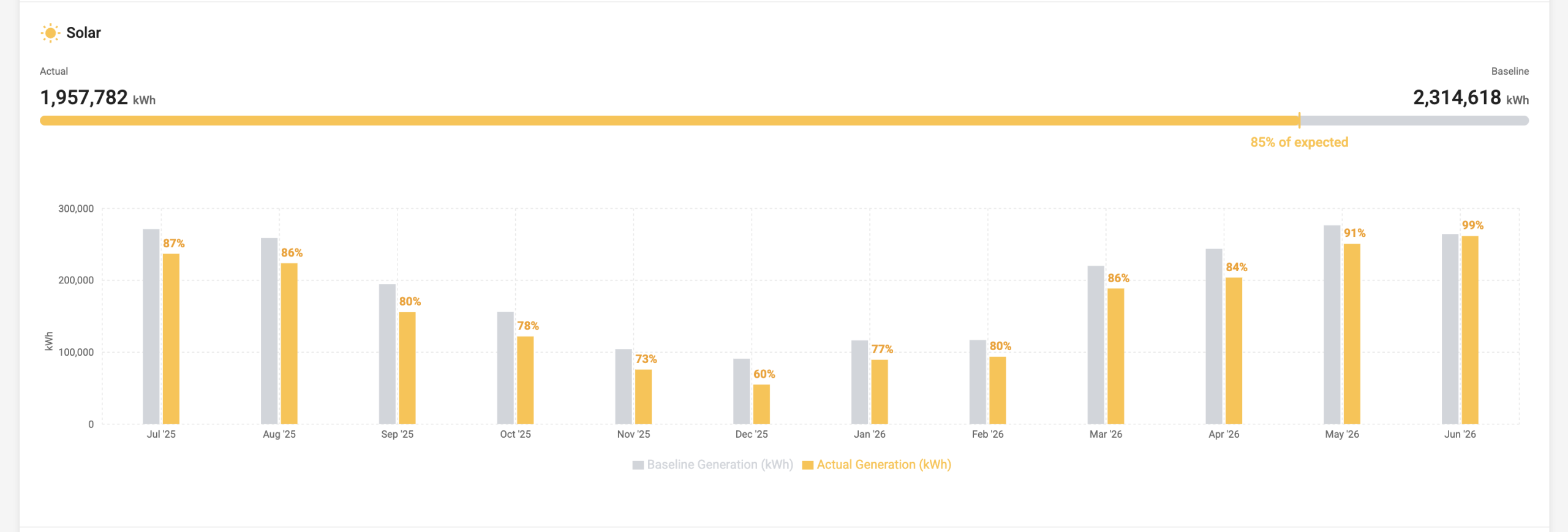
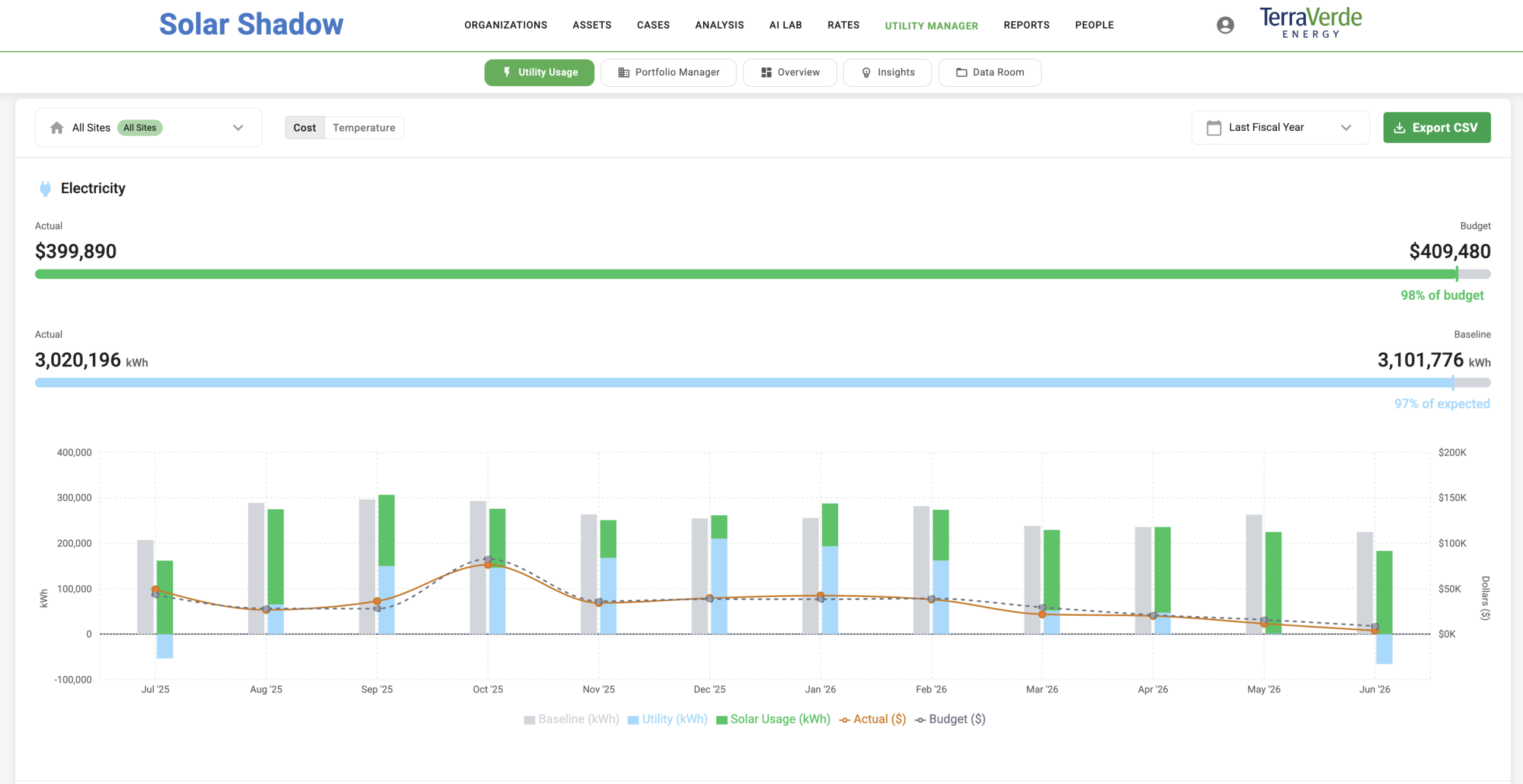
Using Solar Shadow, we are able to produce what each line item of your electric utility bills would have been for a given period, had your energy systems not been deployed. This enables us to answer with unparalleled accuracy how much our clients are actually saving from their energy systems.
We are here to help you with your energy planning, procurement, and solar, battery, EV charging asset management. Reach out to us at hello@terraverde.energy.